Budgeting by the Metre: How to Read a Natural Plaster Quote in 2026
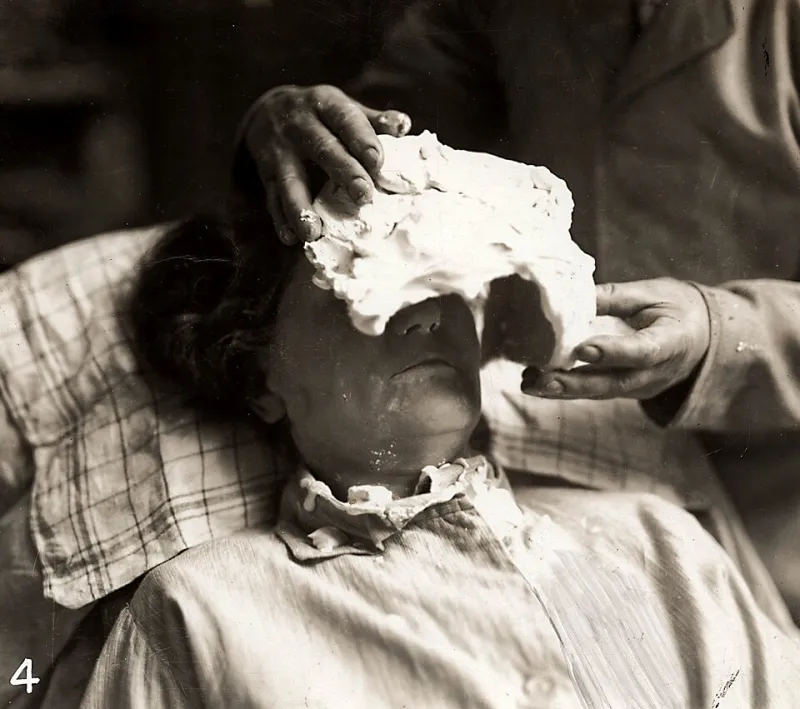
Photo: Unknown authorUnknown author, Public domain, via Wikimedia Commons
Natural plaster pricing is one of those subjects where a single national average is worse than useless. Ask five UK plasterers what lime render or clay plaster costs per square metre and you will get five different figures, often for five different jobs. The useful question is not ‘what is the average?’ but ‘what exactly is included in this square metre?’ That is the reality check worth doing in 2026.
The square metre is a unit, not a specification
A £/m² figure is only a comparator once the specification matches. Lime render on sound, well-keyed masonry is not the same job as lime render over friable brick with gypsum patches, blown areas and a scaffold that has to sit over a conservatory. Clay plaster over a flat plasterboard wall is not the same as clay plaster over wavy lath and plaster with cracks, hollows and a few centuries of dust behind it.
So treat the headline rate as the start of a conversation, not the answer. A useful quote should tell you what is being applied, to what, in how many coats, with what preparation, access, protection and finish. Without that, the cheapest square metre may simply be the one with the most missing.
What actually drives the number
| Cost driver | What changes the figure |
|---|---|
| Substrate and preparation | Hacking off gypsum, repairing friable brick, dub-out, meshing, damping down, masking and making good |
| Coat build-up | Two-coat patch versus three-coat render; clay base plus finish; mesh, beads and reinforcement |
| Access and protection | Scaffold, towers, permit parking, sheeting, temporary roof, protection of adjacent finishes |
| Labour and programme | Drying between coats, weather days, specialist time, travel and site organisation |
| Finish and extras | Limewash, clay paint, reveals, returns, soffits, waste removal and VAT |
A straightforward internal clay plaster may look dearer per square metre than a basic gypsum skim, but it is doing a different job. It is thicker, slower, more breathable and often part of a retrofit strategy rather than a cosmetic refresh. Likewise, a lime render repair is not just ‘render by the metre’ if the plasterer has to diagnose damp, remove cementitious patches and rebuild a couple of compromised patches before the finish coats go on.
Why regional quotes differ
London and the South East often carry higher labour, scaffold and access costs. Rural areas may have lower day rates but more travel, fewer natural plaster specialists and longer lead times. None of that is a scam. It is geography, availability and the practical cost of getting a skilled person and their gear to the wall.
What matters is whether the quote reflects your wall. A local plasterer who knows the housing stock may price more accurately than a cheaper contractor travelling in from three counties away. Ask what is included in access and protection, especially on terraced streets, listed buildings or properties with restricted parking.
Hidden extras that make quotes hard to compare
Scaffold is the classic one. So is waste removal. So are temporary protection, making good around reveals, replacing rotten lath, dealing with damp, meshing cracks, beads, corner reinforcement, primer, limewash and decoration. VAT is another. Two quotes can look wildly different until you line up what each one excludes.
Repair work is especially tricky. A fixed £/m² rate may be fine for a broad, sound wall, but old buildings rarely reveal their full story until the plaster is off. A good plasterer will allow for this with a provisional sum or a day rate for extra repairs, agreed in writing before the work starts.
A like-for-like checklist
Before you compare totals, ask for a schedule of works. It should set out:
- the areas being treated and how they are measured;
- the coat-by-coat specification, including mesh, beads and reinforcement;
- preparation, including removal of existing finishes and repair of the substrate;
- access, scaffold, protection and waste removal;
- the finish, whether that is limewash, clay paint or a floated render;
- drying time allowed between coats and how weather delays are handled;
- exclusions, provisional sums and VAT;
- what happens if extra repairs are discovered.
If one quote is dramatically cheaper, ask which of those items has been left out. Sometimes the answer is perfectly reasonable. Sometimes it means you are comparing a patch-and-paint price with a proper breathable repair.
Budgeting for the unknowns
Old walls are not spreadsheet-friendly. Keep a contingency, especially on period property work, and do not spend it all on the visible finish. The hidden repair is the one that determines whether the plaster lasts. Agree day rates for additional work, get variations in writing and ask how the plasterer will record extra areas or repairs.
A fair natural plaster quote is not the cheapest square metre on the page. It is the one that tells you what that square metre includes, what it excludes and how the risk is shared. In 2026, with materials and labour both moving, that clarity matters more than a made-up national average.