Low-Flow Heat, Old Walls: Heat Pumps and Breathable Plaster in 2026
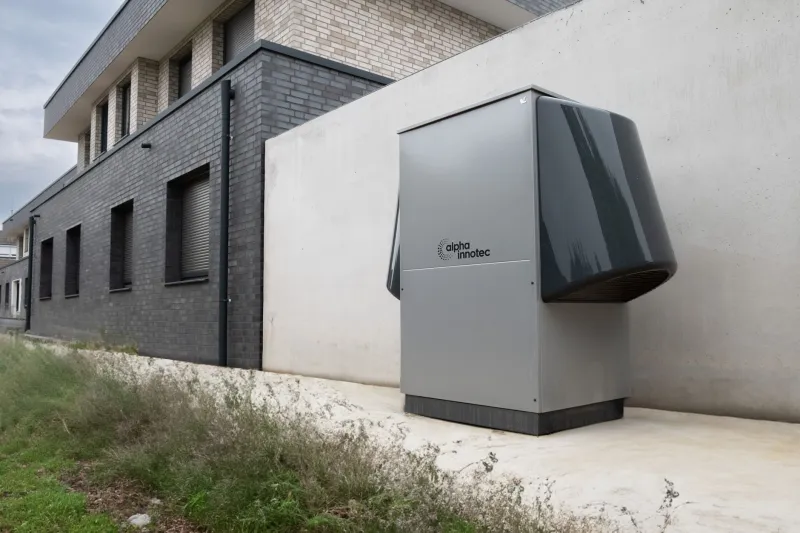
Most heat pump conversations start with kilowatts, COP figures and radiator sizes. Fair enough. But as plasterers, we spend our time looking at the wall itself, and that is where some of the more interesting questions sit. In a solid-wall period home, moving from a high-temperature gas boiler to a low-flow heat pump changes more than the boiler badge. It changes temperature gradients, drying patterns and the way moisture moves through lime, clay and brick.
None of that means heat pumps are bad for old walls. It means the wall needs to be considered as part of the system, not treated as a decorative surface that will somehow sort itself out.
What actually changes behind the plaster
A traditional boiler might push water out at 70°C or more. A heat pump typically runs much lower, often in the 35–45°C range, with larger emitters and longer, gentler heating cycles. Rooms can feel steadier rather than blasting hot and cold. That is usually good for fabric, but it can also mean walls stay cooler for longer and internal moisture has less encouragement to dry quickly.
At the same time, a well-sealed retrofit often reduces accidental ventilation. Warmer internal air holds more moisture. If that moisture meets a cold patch, a cold bridge or an impermeable coating, it condenses. Lime and clay can buffer some of that humidity and release it again, but they are not a substitute for ventilation, drainage or sensible detailing.
Lime and clay are not the same tool
Lime plaster and render are mineral, vapour-permeable and reasonably tolerant of damp conditions. They can cope with moisture moving through the wall and drying out again. Clay plaster is also vapour-permeable and very good at buffering humidity in dry rooms, but it is softer and more sensitive to liquid water. Breathable does not mean flood-proof.
The right choice depends on the substrate, the insulation strategy and the room. In a kitchen or bathroom, a clay finish in the wrong place will struggle. In a dry living room with a breathable wall build-up, clay can be excellent. Around a chimney breast or a cold external corner, lime may be the safer bet. A hybrid specification is sometimes the most honest answer.
A practical checklist for plasterers and homeowners
- Start with water management. Clear gutters, repair downpipes, check drains, plinths and pointing. No plaster finish fixes a leaking roof or a wet plinth.
- Strip impermeable coatings where they are trapping moisture. Vinyl silk, cement render, tanking slurries and gypsum skim over damp brick all deserve a proper assessment before new work goes on.
- Check the substrate for salts, friable brick and old repairs. Use lime-based repairs where appropriate and allow the wall to dry before covering it.
- Plan the insulation interface carefully. Internal insulation moves the dew point and can create cold bridges at edges, reveals and floor zones. Get hygrothermal advice for solid brick walls rather than guessing.
- Do not rely on breathability as ventilation. Extract fans, trickle vents, background ventilation or MVHR still matter. A breathable wall is not a magic extractor fan.
- Think about airtightness and draughts together. Draught-proofing is useful, but it can reduce incidental drying. Controlled ventilation has to pick up the slack.
- Keep emitters and airflow sensible. Large radiators or fan coils pushed tight against walls can affect surface temperatures and air movement. Leave room for the wall to behave like a wall.
- Specify compatible finishes. Limewash, clay paint and mineral paints are usually more appropriate than acrylic or vinyl coatings over breathable plaster.
- Monitor after commissioning. Hygrometers, a moisture meter and a thermal camera are more useful than assumptions. Watch the first heating season closely.
Warning signs that the wall is being asked to do too much
A few clues suggest the retrofit is outrunning the wall. Condensation on upper walls or in corners, black mould behind furniture, damp patches at insulation edges and cold bridges are all worth investigating. Salt bloom on the surface, crumbling lime or soft, crumbly clay point to moisture that is not escaping. Paint blistering, hollow plaster and persistent high humidity are also red flags.
Sometimes the answer is not a new plaster finish. It might be a ventilation upgrade, a repaired gutter, a different insulation detail or a less ambitious internal wall build-up. A heat pump can work beautifully in a period home, but it needs the whole house to make sense together.
Designing for low-flow heat without wrecking the walls
Treat the heat pump as part of a whole-house plan. Room-by-room heat loss, emitter sizing, ventilation and moisture control all belong in the same conversation. Avoid over-insulating one wall in isolation and then wondering why condensation appears at its edges. Use breathable insulation such as wood fibre, hemp or cork where it suits the build-up, but detail it properly.
If in doubt, keep wet or risky areas lime-based and use clay where it can dry. The plaster is often the first thing to show that a building is under stress, and that makes it a useful early warning system rather than a problem to cover up.