What the Certificate Misses: EPCs, Old Walls and the Limits of a Star Rating
Every few weeks someone gets in touch with the same hopeful question: if we replaster the whole house in lime, will it push the EPC up a band? It is a fair thing to ask, especially with lenders, insurers and letting rules all wanting a certificate that looks respectable. The honest answer is that it almost certainly will not. The longer answer is more interesting, and rather more useful if you own an old UK home.
The certificate is a spreadsheet with a floor plan
An EPC in England, Wales and Northern Ireland is produced using the Reduced Data Standard Assessment Procedure, usually shortened to RdSAP. An assessor visits, measures rooms, notes the wall type, checks the heating and hot water, looks at glazing, loft insulation, lighting and any renewables, then feeds it all into software that produces a rating and a list of suggested improvements.
What the software is trying to estimate is the cost of energy for space heating, hot water and lighting under standard assumptions. It is not trying to work out whether your walls can safely dry out. There is no field on the form for “lime plaster”, “clay plaster”, “vapour-open finish” or “hygroscopic buffering”. A solid brick wall is a solid brick wall. A coat of modern gypsum skim over the same brickwork does not make the assessor's wall entry change.
That is the first thing to understand. The EPC sees construction types and insulation thicknesses; it does not see craft, permeability or moisture risk. If you are expecting a star rating to reward a breathable specification, you are asking a fish to评论 a bicycle.
What actually moves the number
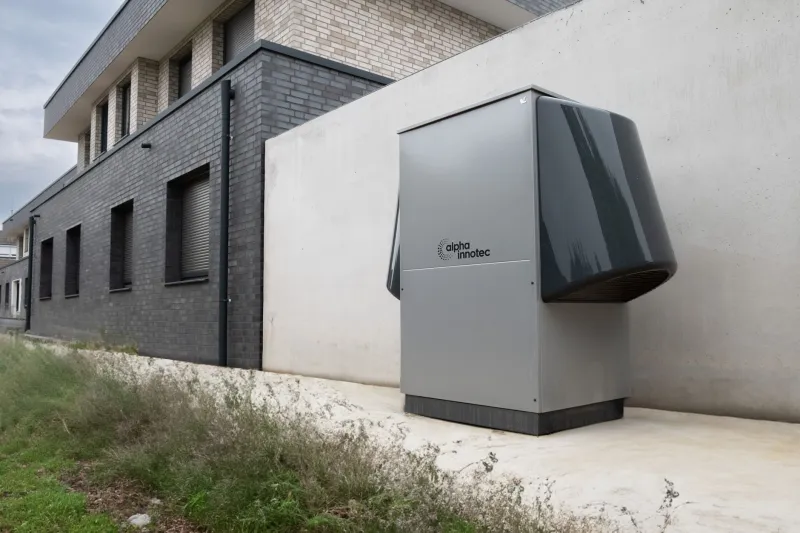
In old houses, the big levers are usually mundane. Loft insulation, draught-proofing, heating controls, a decent cylinder, fixing failed windows, and sometimes floor insulation. The EPC also responds to the heating system and fuel type, which is why a heat pump can shift a rating far more than any wall finish. Wall insulation may be credited if it is installed and evidenced, but the software generally works from assumed U-values for the wall build-up rather than from a hygrothermal model of your particular rubble-stone cottage.
Airtightness is another odd one. Dwellings are often given a default air permeability figure unless a pressure test has been done. Plastering and parging can reduce incidental draughts, but unless someone commissions a test, the certificate may not notice. That is not an argument for sealing an old house indiscriminately; it is an argument for understanding what is measured and what is merely assumed.
Where lime and clay do earn their keep
The case for natural plaster is a building-physics case, not an EPC case. Lime and clay finishes are vapour-open and can help walls manage moisture. They are also useful when you are adding insulation internally: a breathable insulation and a lime or clay finish can reduce the risk of trapping moisture in the wrong place, provided the detailing is right. That matters enormously for the long-term condition of the building. It just does not appear as a line item on the certificate.
There are indirect effects. A well-plastered, well-detailed envelope is easier to draught-proof. Repairs to failed render can keep water out, which protects insulation performance. Clay plaster can buffer indoor humidity, which may make a house feel more comfortable at a given thermostat setting, though the EPC will not model that either. These are real benefits. They are simply not star-rated.
The trap: chasing a rating into a cold wall
EPCs come with a recommendation table. Some of it is sensible. Some of it is generic to the point of recklessness in a period property — external wall insulation on a stone cottage, for example, or sealing up a wall that was designed to dry inward. If you follow the recommendations as a shopping list, you can spend a lot of money and create a moisture problem that the certificate never warned you about.
The EPC is a blunt instrument. It is not a retrofit assessment, and it is definitely not a damp survey. For a serious renovation, the more useful documents are a proper moisture investigation, a condition survey and, where grant funding or a whole-house plan is involved, a retrofit assessment under a recognised standard such as PAS 2035. Those look at the building as a system. The EPC looks at it as a set of tick-boxes.
A sensible order of spend
If the EPC is due anyway, get it done and read the assumptions rather than just the badge. Check the wall type it has recorded, the heating and the floor area. Look at the recommendations and ask which are actually appropriate for your construction. Then, if energy bills and comfort are the real concern, spend in this rough order: draughts and loft first, heating controls and hot water next, windows where they are genuinely failing, and walls last — with a moisture strategy before any insulation goes in.
Natural plaster has a place in that plan, particularly on solid walls and in breathable retrofits. It should be chosen because it suits the wall, not because someone has promised it will add points to a certificate that cannot see it. In 2026, with EPC reform still being discussed and lenders paying closer attention to ratings, it is tempting to treat the certificate as the goal. For old buildings, the goal is a wall that stays dry, warm enough and repairable. The stars are a side effect, and a modest one at that.