Before the Drill Goes In: Damp-Proof Creams and Breathable Walls in Old UK Homes
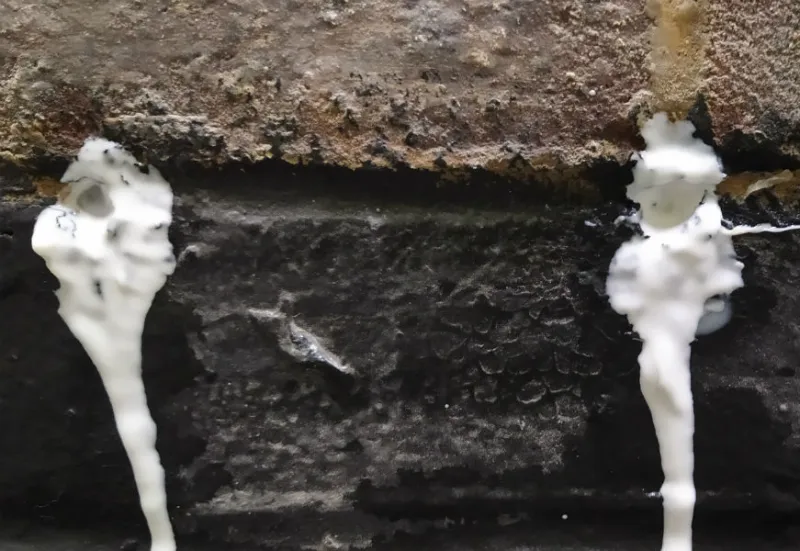
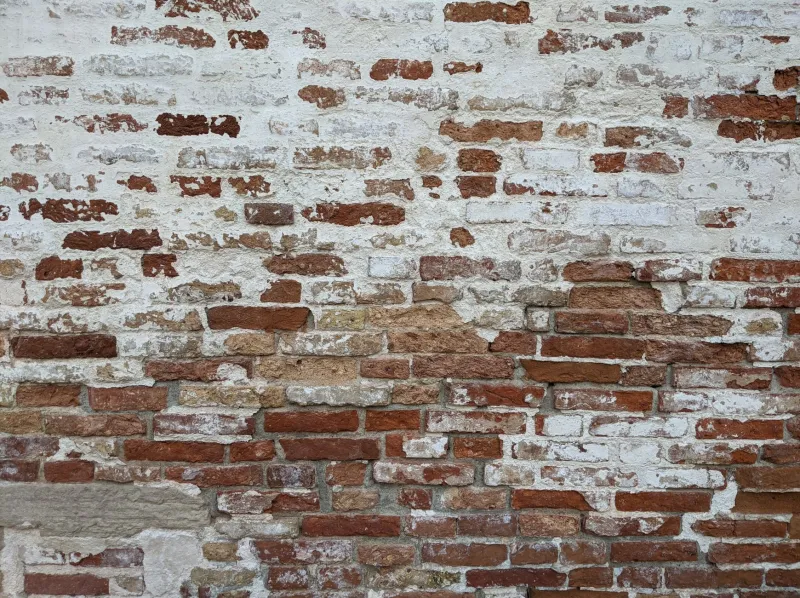
Photo: Kebabknight, CC BY-SA 4.0, via Wikimedia Commons
There is a familiar scene in older UK houses. A damp patch appears low on a wall, someone calls in a specialist, and within an hour the conversation has moved from gutters and ground levels to drilling a row of holes and injecting a cream. It sounds tidy, scientific and reassuringly permanent. Then the plasterer turns up to make good, and the question arises: should this wall be finished in lime, clay or gypsum?
That is where the trouble often starts. Damp-proof creams and breathable plasters are not natural enemies, but they do not always pull in the same direction. One is trying to interrupt moisture movement inside the wall. The other is designed to let the wall dry outwards. Get the diagnosis and the sequencing right, and they can coexist. Get them wrong, and you can spend good money hiding a problem rather than solving it.
What the cream actually does
Most injected damp-proof creams are silane or siloxane-based. They are pumped into holes drilled along a mortar course, where they are meant to soak into the brick, stone or mortar and line the pores with a water-repellent layer. The idea is to create a horizontal break that stops rising moisture from moving further up the wall.
That is a simplified description, but it is close enough for planning purposes. The key point is that these creams are not a waterproof tanking system. They do not fill a cavity, seal a crack or divert groundwater. They rely on the wall being suitable, the injection being well executed, and the moisture source being genuinely rising damp rather than something else.
In dense, uniform brickwork with a clear mortar course, the logic can hold together. In rubble stone, flint, highly porous old bricks, or walls that have been patched with cement, the results are far less predictable. The cream may take unevenly, miss sections, or simply not penetrate where it needs to. A guarantee certificate is not the same as a diagnosis.
Where the treatment can help, and where it gets oversold
There are cases where a damp-proof cream forms part of a sensible repair strategy. If rising damp has been properly identified, the wall is of a suitable construction, and the surrounding details are being dealt with, it can reduce moisture movement in the lower wall. It is most convincing when it sits alongside better drainage, lower external ground levels, repaired gutters and a plaster specification that allows the wall to dry.
But rising damp is diagnosed far more often than it is proven. A damp reading near the skirting does not, on its own, tell you that groundwater is climbing the wall. It might be a leaking downpipe, a bridged damp course, splashback from a path, a blocked airbrick, condensation from poor ventilation, or salts drawing moisture from the air. In each case, a cream injection is the wrong tool. It may do no harm, but it also does nothing for the actual cause, and the wall stays wet.
This is why the most valuable part of any damp survey is not the meter reading. It is the explanation. If nobody has looked at the roof, gutters, drainage, ground levels, render, rainwater goods and internal ventilation, the diagnosis is incomplete.
The trap: moisture needs somewhere to go
Old walls are not pipes with a single one-way flow. Moisture moves through them in several ways at once: by capillary action, by vapour movement, by gravity, and by splash or leakage. A damp-proof cream tries to interrupt one of those routes. It does not remove the water already in the wall, and it does not stop moisture entering from above or from the face of the wall.
If the wall is then finished with a tight, low-permeability plaster or render, the moisture can become trapped. Gypsum plaster, cement render and modern vinyl paints are poor at letting water vapour pass. In a wall that is already damp, that can lead to blistering, salt blooms, crumbling plaster and decayed skirting. The cream may be doing its job at the injection line while the rest of the wall struggles to dry.
Breathable finishes are not a magic remedy either. Lime plaster, clay plaster and lime render can help a wall manage moisture, but they work best when the wall is not being fed by an active leak or high ground levels. A breathable plaster over a wet, badly drained wall is still a wet wall. It may fail more gracefully than gypsum, but it will not fix the source.
Plaster and render are not waterproofing
This is worth saying plainly: the plaster on the inside face and the render on the outside face are not the damp-proof course. They are the wall's clothing, not its waterproof jacket. Their job is to allow moisture to move and evaporate, to accommodate small movements, and to protect the substrate from weather and wear.
On the outside, a cement render patched over old brickwork can trap water and push it inwards. On the inside, a hard gypsum skim over a damp wall can hold moisture against the masonry and make the problem look worse. The repair strategy should therefore deal with the wall as a system: rainwater management first, then ground levels and drainage, then any structural or masonry repairs, then the plaster or render specification.
Lime and clay do not cancel out bad detailing. They simply give the wall a better chance to dry when the detailing is right.
A sensible sequence for old walls
Start with water management. Clear and repair gutters, downpipes and drains. Check that external ground levels sit below the internal floor level, and that paths and paving fall away from the wall. Look for bridged damp courses, blocked airbricks and cement plinths that trap moisture. Investigate any plumbing leaks properly, including under floors and behind kitchen units.
Then assess the wall. Is it solid brick, stone, rubble, cob or timber frame? What is the condition of the mortar? Are there salts, and where are they concentrated? Has the wall been rendered or painted with something impermeable? The answers should shape the specification far more than a generic damp-proofing package.
Only then decide whether a damp-proof cream is part of the answer. If it is, plan the plaster and render around it. Allow the wall to dry before covering it. Use a breathable internal plaster where appropriate. Avoid sealing the surface with vinyl paint or a cement-based skim. Keep the detail at the base of the wall open enough to evaporate, and do not bury the injection line under a impermeable skirting or floor slab.
If a cream is going in anyway
Ask what evidence supports the diagnosis. Ask how the wall will be allowed to dry afterwards. Ask what happens to the salts, and whether the plaster specification accounts for them. Ask how the injection holes will be filled and finished, and whether the external render is compatible with the wall. A reputable contractor should be able to answer without treating the questions as an insult.
It is also worth separating the guarantee from the repair. A guarantee may cover the injection, but it will not necessarily cover the plaster, the skirting, the decorations or the disruption. The real test is whether the whole wall has been considered, not just the drill line.
Damp-proof creams are not the villain of this story. They are simply one intervention among many, and they need a proper diagnosis around them. In old UK walls, the best results usually come from slowing down, finding the water, and letting lime and clay do the job they are good at: helping a wall breathe once the source has been dealt with.